On the occasion of the EU-Canada Summit, held in Montréal at the end of October 2026, Égides, Chair of Pride 7, brought the recommendations of LGBTQI civil society to the highest representatives of the European Union and Canada. A look back at a week of advocacy.
A panel with the Delegation of the European Union to Canada
On October 26, 2026, Égides for Pride 7 and the Delegation of the European Union to Canada held a hybrid panel in Montréal: “Engaging with the G7 and the G20 for the rights of LGBTQI people”.
Nearly 150 people followed the discussion, in the room and online: representatives of civil society, institutions and international organizations from 24 countries and territories. Almost half joined from the African continent.
Drawing on the discussion between the panelists and the questions from the audience, Égides developed five recommendations to the European Union, compiled in a short report to be handed in person to its representatives.

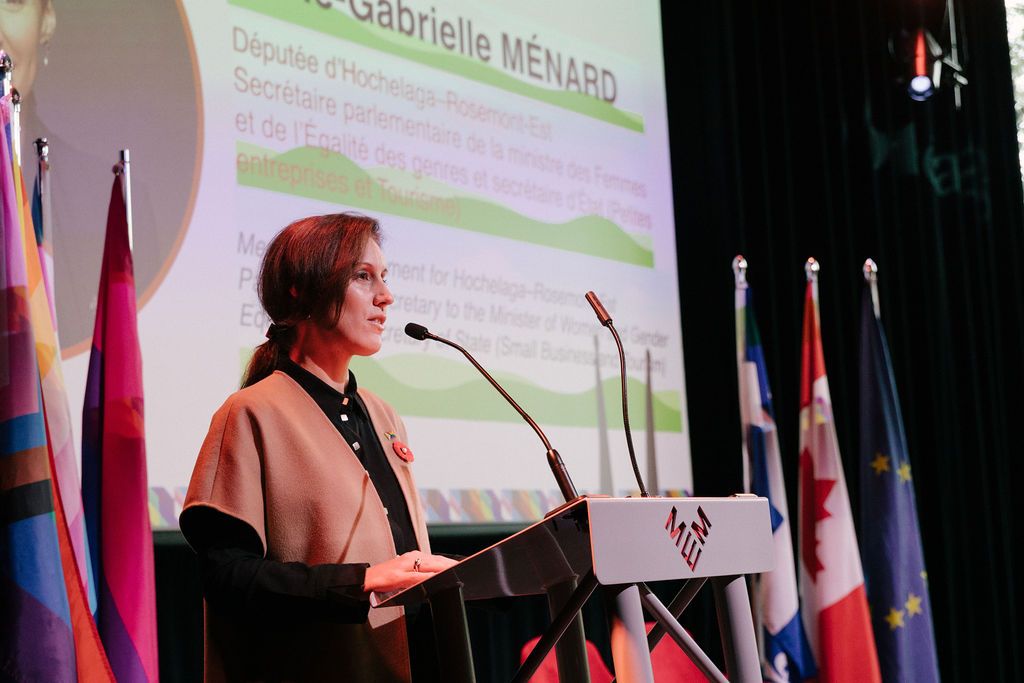
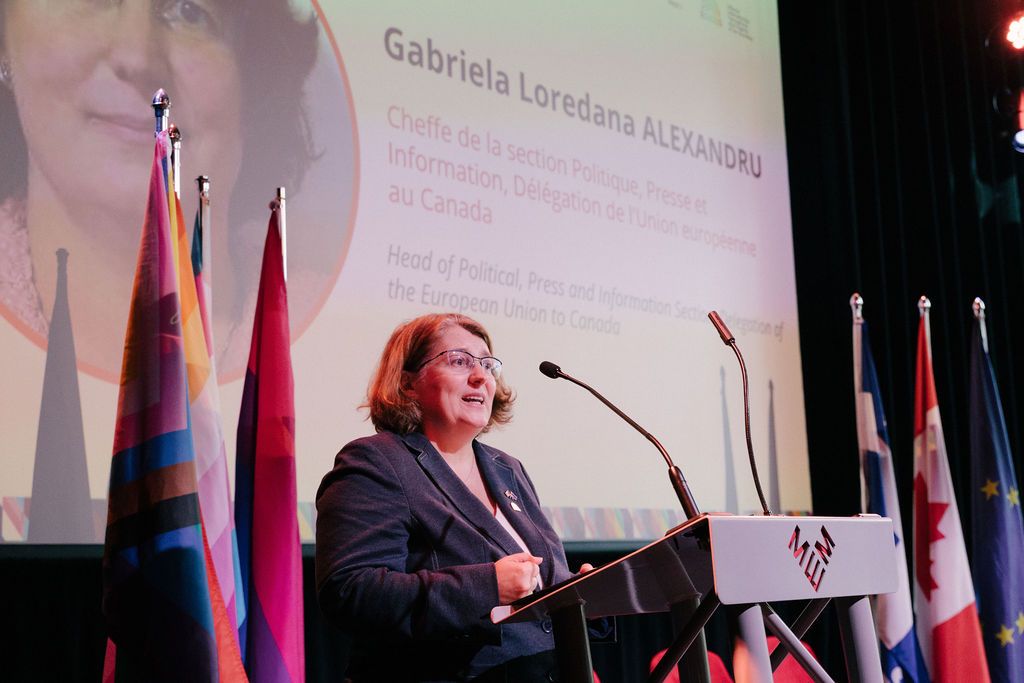
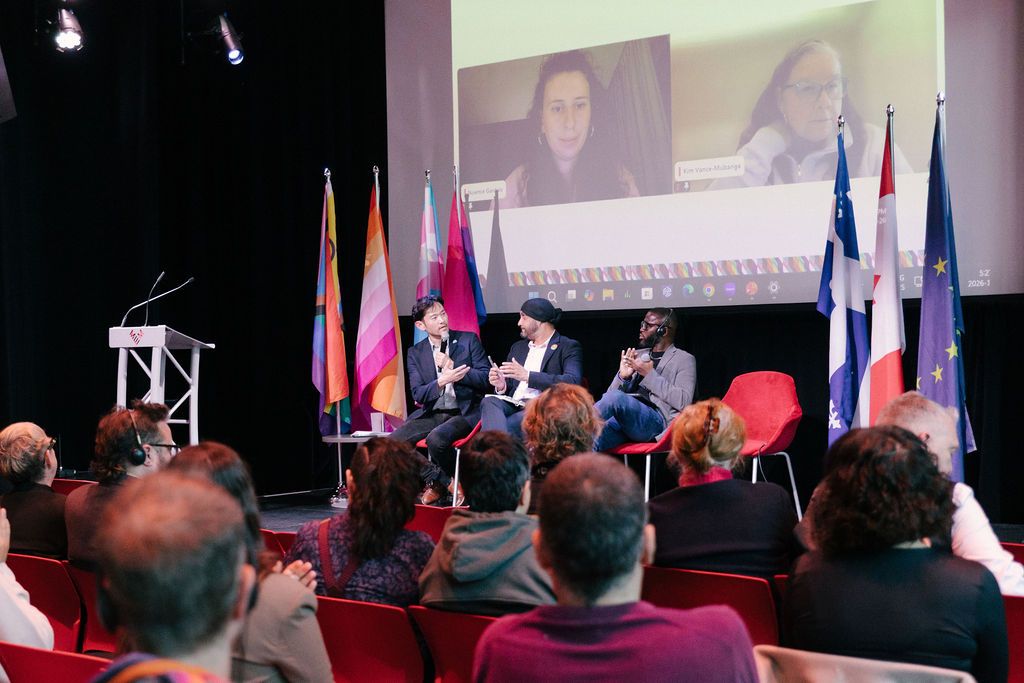
Photos: Marie Rousseau
Five recommendations to the European Union
- The rights of LGBTQI people are not a bargaining chip. They must not be sacrificed to diplomatic compromise, at the G7 or elsewhere, and must be an integral part of a foreign policy that places democracy and human rights at the heart of the European Union’s work.
- Recognize, name and counter the rise of anti-gender and anti-LGBTQI hate, driven by an organized and very well-funded movement, in particular by consistently defending agreed language in multilateral negotiations.
- Provide sustainable funding to LGBTQI and feminist organizations, including for their security, protect civic space, and support the participation of Global South movements in decision-making spaces.
- Consult the movements concerned before any diplomatic initiative, especially in contexts where LGBTQI people are criminalized.
- Make closer Canada-EU ties a lever for diplomatic coordination and for a shared feminist diplomacy, in line with GAP IV, and support Pride 7 in the face of the 2027 US G7 presidency.
A meeting with European Commission Executive Vice-President Roxana Mînzatu
On October 29, on the sidelines of the Summit, Michaël Arnaud, Executive Director of Égides, met Roxana Mînzatu, Executive Vice-President of the European Commission, and handed her the 2026 Pride 7 recommendations in person. He was joined by Victoria Legault, Co-Chair of Égides, and Hayley Newman-Petryshen of Dignity Network Canada.
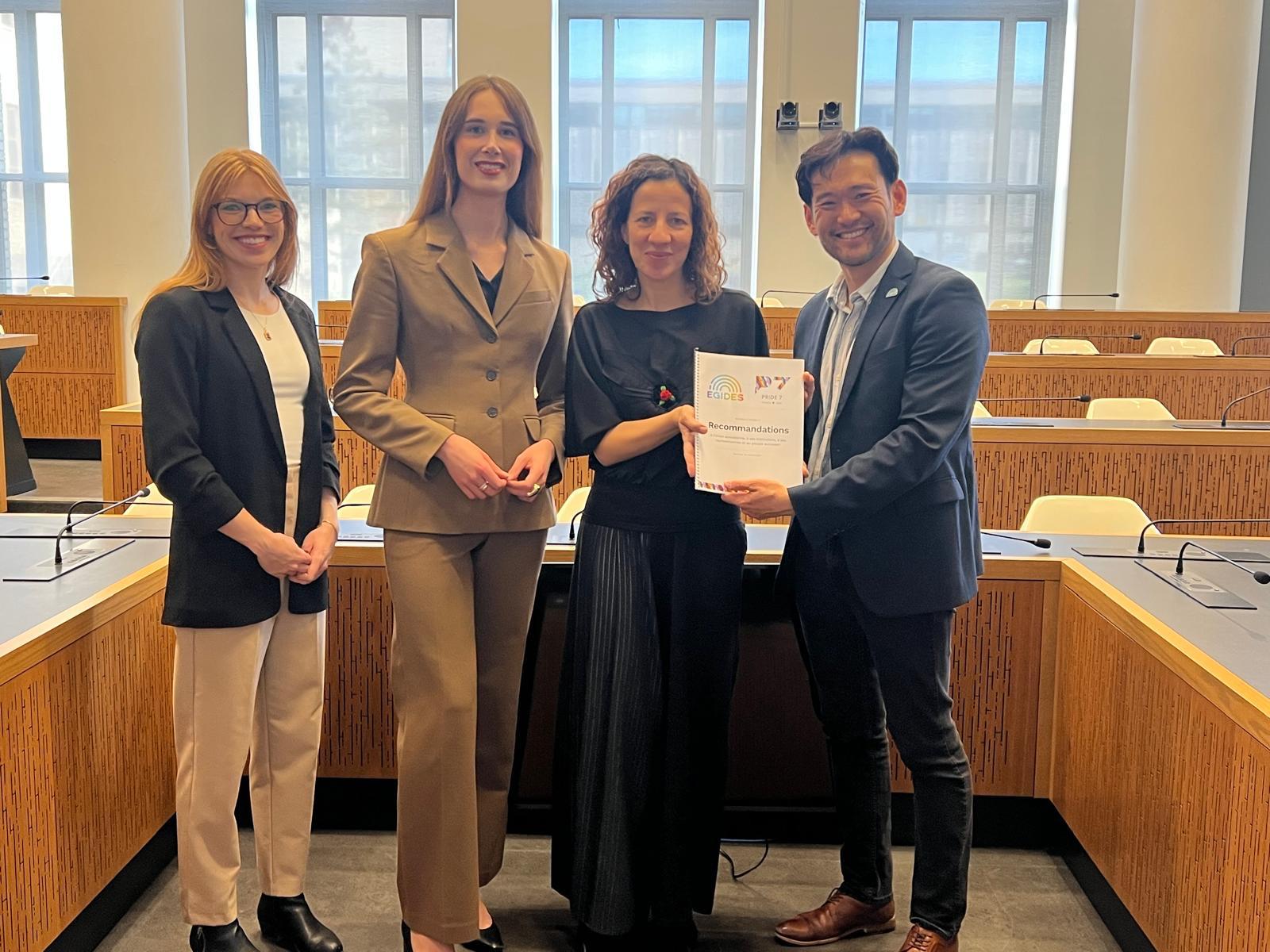
Three messages were shared:
- the European Union must pursue a feminist foreign policy that includes LGBTQI people;
- LGBTQI civil society must have a central place in the closer partnership between the EU and Canada, starting with the Summit discussions;
- the EU LGBTQI Equality Strategy 2026-2030 has been adopted: it now needs funding that matches its ambitions.
A question to Kaja Kallas and Anita Anand
The same day, Université de Montréal and the Centre Jean Monnet de Montréal hosted the conference “Canada and the European Union: Strategic Partners and Allies for the Future” at the Marché Bonsecours. Kaja Kallas, High Representative of the European Union for Foreign Affairs and Security Policy, and Anita Anand, Minister of Foreign Affairs of Canada, spent 45 minutes discussing their shared geopolitical challenges, in a conversation moderated by Frédéric Mérand, Chair of the Department of Political Science at Université de Montréal.
Only one question from the audience was taken: the one asked by Michaël Arnaud on behalf of Égides and Pride 7.
With the current global context becoming increasingly hostile to human rights, gender equality, and especially the rights of LGBTQI people led by the United States, will Canada and the EU commit to being and remaining vocal allies and defenders, especially in collaborative foreign policies that are feminist, that name and publicly stand up against hate, and that are intentional in the protection of human rights and LGBTQI rights, including by supporting civil society movements politically and financially?
Michaël Arnaud, Executive Director, Égides
Anita Anand answered yes, to applause from the audience. She stated that gender equality, the rights of LGBTQI people and the rights of Indigenous peoples remain at the top of Canada’s foreign policy, that these values will not be replaced, and that both Canada and the EU are known around the world as beacons of these values.
Kaja Kallas also answered yes, while acknowledging that it is getting harder. She described a climate in which major, openly misogynistic players set an example for others, in which human rights are often pushed aside in favour of business, and in which the International Criminal Court is under heavy pressure, which the EU is pushing back against. She noted that the EU funds many countries and expects them to respect certain rights in return.
Anita Anand closed by stressing the role both partners have in upholding these principles, including in bilateral meetings, and the importance of working as closely as possible with the EU: there is strength in numbers.
What comes next
These public commitments matter. Égides and Pride 7 will keep following how they are put into practice, in particular the funding of the EU LGBTQI Strategy and the place given to civil society in the Canada-EU partnership, ahead of the 2027 US G7 presidency.